Hebei Huafeng | C5-M Anti-Corrosion Transformer Components for CGN Yangjiang Fanshi II Deep Offshore Wind Project
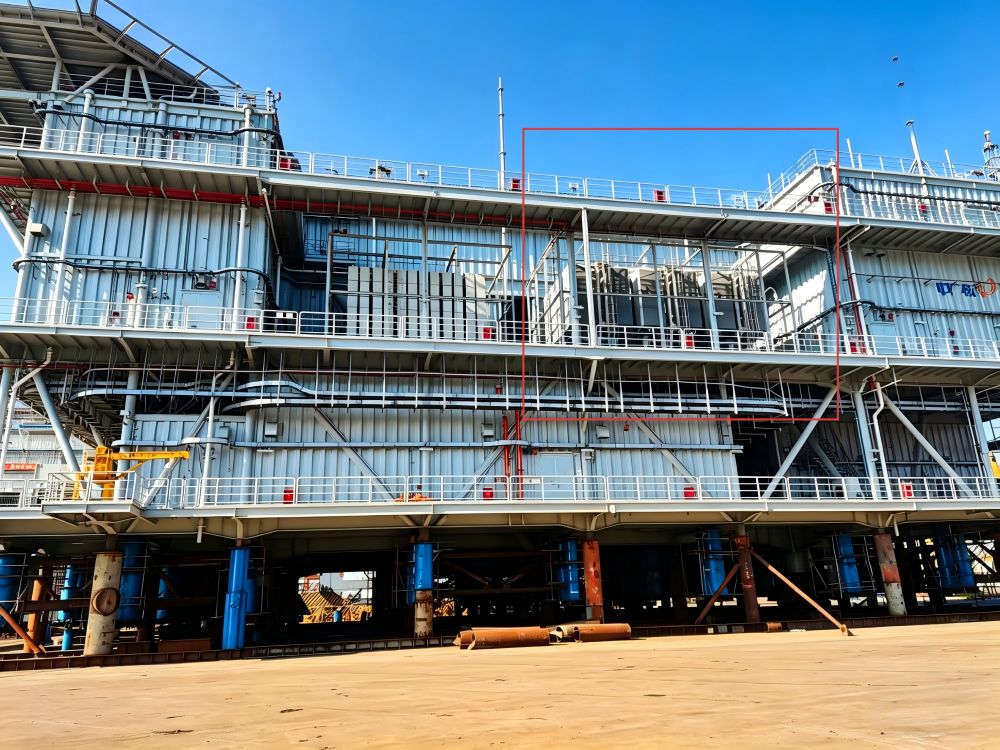
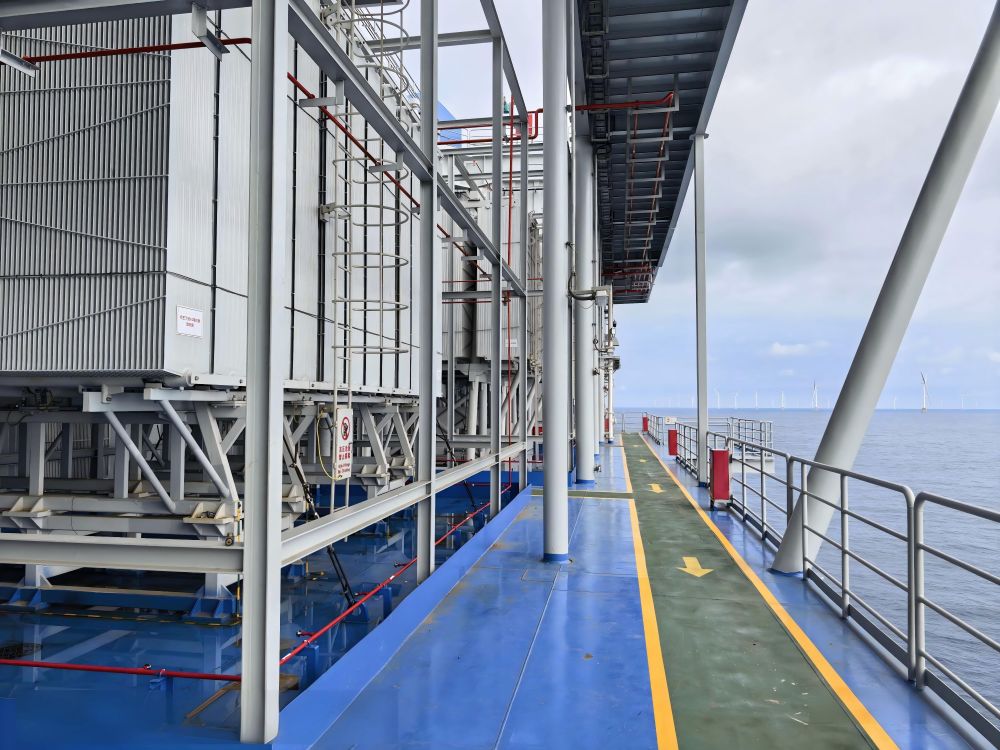
BAODING, HEBEI, CHINA, October 9, 2026 /EINPresswire.com/ -- The CGN Yangjiang Fanshi II offshore wind project represents a major milestone in deep-offshore renewable energy development. For this challenging marine application, Hebei Huafeng Industrial Group Co., Ltd. engineered and supplied specialized offshore wind transformer components, providing heavy-duty anti-corrosion protection and reliable cooling performance. The project features a planned capacity of 1 GW and utilizes a massive 500 kV offshore booster station to collect and transmit clean electricity.
Located roughly 70 kilometers off the coast of Yangjiang, Guangdong Province, this wind farm operates in water depths from 46 to 53 meters. The project features 58 giant turbines, including 25 units rated at 16.2 MW and 33 units rated at 18 MW. Operating power equipment in deep water exposes transformers to dense salt spray, high humidity, and continuous wave vibrations. Sourcing proven offshore wind transformer components is essential to ensure decades of stable operation without costly offshore maintenance interventions.
Deep-Offshore Conditions Increase the Consequence of Component Degradation
Operating power transformers on an offshore booster station 70 kilometers from the coastline presents engineering challenges vastly different from onshore substation environments.
Severe atmospheric corrosivity: Dense marine salt fog, high relative humidity, and airborne chloride deposition create an aggressive chemical environment that rapidly attacks unprotected metals.
Typhoon and wave vibrations: Offshore platforms endure continuous hydrodynamic wave action and seasonal typhoon wind loads, transmitting severe cyclic vibration to transformer auxiliary equipment.
Intense ultraviolet exposure: Unobstructed marine solar radiation accelerates the photo-oxidation, chalking, and degradation of organic coatings and elastomeric seals.
Extreme maintenance logistics: Reaching an offshore booster station requires specialized crew transfer vessels or helicopters. Weather windows are limited, making emergency maintenance logistically difficult and exceptionally expensive.
Under these unforgiving conditions, any component failure, such as a leaking radiator seam, a corroded valve stem, or an oxidized conservator bellows, risks causing an unscheduled shutdown of a multi-megawatt generation facility.
Radiator Cooling and Corrosion Protection Must Be Specified Together
In an offshore wind transformer, the cooling system must provide efficient thermal dissipation while maintaining absolute structural and fluid containment integrity. Huafeng engineering approach treats heat exchange and corrosion protection as an integrated system.
Dual longitudinal-seal construction: Huafeng utilizes its patented dual longitudinal-seam radiator design. By incorporating two independent sealing barriers along panel edges, the radiator eliminates the risk of dielectric oil leakage caused by thermal cycling and continuous platform vibration.
Advanced metallurgy: Depending on project specifications, radiators can be fabricated from high-grade cold-rolled steel, 304 or 316L austenitic stainless steel, or marine-grade aluminum alloys to provide intrinsic corrosion resistance.
Multi-layer heavy-duty coating systems: Steel surfaces undergo automated shot blasting to Sa 2.5 cleanliness, creating an optimal surface anchor profile. Components receive a high-build epoxy zinc-rich primer, an intermediate epoxy micaceous iron oxide barrier, and a durable aliphatic polyurethane or polysiloxane topcoat, achieving a total dry film thickness exceeding 300 micrometers.
Alternative hot-dip galvanizing: For extreme abrasion and mechanical impact resistance, radiators can be hot-dip galvanized in accordance with ISO 1461, providing thick metallurgical zinc-iron alloy protection.
This balanced combination of structural robustness and advanced surface protection ensures that cooling performance remains stable throughout the platform design life.
Sealing Components Protect the Transformer Oil Circuit
Dielectric oil integrity is paramount in high-voltage offshore transformers. Auxiliary components that interface with the transformer oil circuit must provide dependable isolation and sealing under marine operating conditions.
Transformer butterfly valves: Huafeng supplies wafer butterfly valves of the BDY series, flanged ball valves, and vacuum valves designed specifically for transformer oil circuits. Precision-machined valve bodies and resilient P-type rubber seats maintain leak-tight shutoff under full vacuum during oil filling and positive pressure during operation.
Marine-grade elastomer seals: Valve seats and flange gaskets are manufactured from high-grade fluororubber (FKM) or hydrogenated nitrile butadiene rubber (HNBR), providing exceptional resistance to ozone, UV radiation, high-temperature transformer oil, and marine humidity.
Corrugated oil conservators: Huafeng manufactures air-sealed and capsule-type corrugated oil expansion tanks that accommodate thermal oil volume fluctuations while hermetically isolating the dielectric fluid from atmospheric oxygen, moisture, and salt ions.
Corrosion-resistant hardware: All valve fasteners, hinge pins, and indicator linkages utilize grade 316 stainless steel or marine-coated hardware to prevent galvanic corrosion.
By deploying engineered sealing components across the fluid circuit, Hebei Huafeng Industrial Group Co., Ltd. ensures comprehensive protection for the transformer internal insulation.
Huafeng’s Fanshi Application Provides Project-Specific Experience
Supplying transformer radiators for the CGN Yangjiang Fanshi Offshore Wind Power Project provides Huafeng with valuable, real-world offshore application experience.
Rather than relying on theoretical laboratory models, the company has proven its engineering and manufacturing capabilities on one of the world’s most demanding deep-offshore wind developments.
This project experience encompasses every phase of execution.
Harmonizing engineering drawings and structural calculations with offshore platform design requirements.
Qualifying heavy-duty anti-corrosion coating procedures under third-party inspection oversight.
Executing 100 percent hydrostatic pressure and pneumatic leak tests on all completed radiator elements.
Managing specialized export packing and moisture-barrier crating for maritime transport and dockside handling.
This successful deployment demonstrates that Huafeng possesses the technical expertise and manufacturing discipline required for high-stakes offshore energy infrastructure.
Current ISO 12944 Terminology Should Be Distinguished from Legacy C5-M Wording
In offshore engineering specifications, clarity regarding corrosion standards is essential. The term “C5-M” originates from older editions of ISO 12944 (such as the 1998 standard), where it designated marine environments with very high corrosivity.
In the updated ISO 12944 standard (2017/2018 edition), atmospheric corrosivity categories have been updated.
Category C5 designates “Very High” corrosivity environments, encompassing industrial areas with high humidity and aggressive atmospheres, as well as coastal areas with moderate salt exposure.
Category CX designates “Extreme” corrosivity environments, specifically covering offshore platforms, marine splash zones, and severe industrial atmospheres.
ISO 12944-9:2018 specifically governs protective paint systems and laboratory test procedures for offshore and related structures.
While legacy specifications frequently continue to use the familiar “C5-M” designation, modern engineering packages should reference current ISO 12944-2 corrosivity categories (C5 or CX) and ISO 12944-9 testing protocols. Huafeng engineering team helps procurement teams align legacy terminology with current international standards to ensure compliance.
Offshore Component Selection Should End with a Project-Specific Specification Review
Selecting auxiliary components for deep-offshore power transformers requires a thorough, project-specific technical evaluation. Sourcing teams must avoid generic commercial claims and focus on documented engineering parameters.
Reviewing general arrangement drawings, header port alignments, and center distances.
Defining site environmental corrosivity ratings, expected service life, and dry film thickness targets.
Verifying third-party salt spray test reports (such as 1,440-hour or 4,200-hour exposure tests) and coating adhesion data.
Aligning valve flange drillings, torque requirements, and sealing material compatibility.
Establishing factory inspection holding points and documentation delivery frameworks.
Huafeng provides complete technical dossiers and engineering support to assist offshore wind developers and transformer OEMs in configuring dependable component solutions.
To request technical datasheets, coating test reports, or engineering evaluations for offshore wind transformer components, please visit https://www.huafengjituan.com/.
Located roughly 70 kilometers off the coast of Yangjiang, Guangdong Province, this wind farm operates in water depths from 46 to 53 meters. The project features 58 giant turbines, including 25 units rated at 16.2 MW and 33 units rated at 18 MW. Operating power equipment in deep water exposes transformers to dense salt spray, high humidity, and continuous wave vibrations. Sourcing proven offshore wind transformer components is essential to ensure decades of stable operation without costly offshore maintenance interventions.
Deep-Offshore Conditions Increase the Consequence of Component Degradation
Operating power transformers on an offshore booster station 70 kilometers from the coastline presents engineering challenges vastly different from onshore substation environments.
Severe atmospheric corrosivity: Dense marine salt fog, high relative humidity, and airborne chloride deposition create an aggressive chemical environment that rapidly attacks unprotected metals.
Typhoon and wave vibrations: Offshore platforms endure continuous hydrodynamic wave action and seasonal typhoon wind loads, transmitting severe cyclic vibration to transformer auxiliary equipment.
Intense ultraviolet exposure: Unobstructed marine solar radiation accelerates the photo-oxidation, chalking, and degradation of organic coatings and elastomeric seals.
Extreme maintenance logistics: Reaching an offshore booster station requires specialized crew transfer vessels or helicopters. Weather windows are limited, making emergency maintenance logistically difficult and exceptionally expensive.
Under these unforgiving conditions, any component failure, such as a leaking radiator seam, a corroded valve stem, or an oxidized conservator bellows, risks causing an unscheduled shutdown of a multi-megawatt generation facility.
Radiator Cooling and Corrosion Protection Must Be Specified Together
In an offshore wind transformer, the cooling system must provide efficient thermal dissipation while maintaining absolute structural and fluid containment integrity. Huafeng engineering approach treats heat exchange and corrosion protection as an integrated system.
Dual longitudinal-seal construction: Huafeng utilizes its patented dual longitudinal-seam radiator design. By incorporating two independent sealing barriers along panel edges, the radiator eliminates the risk of dielectric oil leakage caused by thermal cycling and continuous platform vibration.
Advanced metallurgy: Depending on project specifications, radiators can be fabricated from high-grade cold-rolled steel, 304 or 316L austenitic stainless steel, or marine-grade aluminum alloys to provide intrinsic corrosion resistance.
Multi-layer heavy-duty coating systems: Steel surfaces undergo automated shot blasting to Sa 2.5 cleanliness, creating an optimal surface anchor profile. Components receive a high-build epoxy zinc-rich primer, an intermediate epoxy micaceous iron oxide barrier, and a durable aliphatic polyurethane or polysiloxane topcoat, achieving a total dry film thickness exceeding 300 micrometers.
Alternative hot-dip galvanizing: For extreme abrasion and mechanical impact resistance, radiators can be hot-dip galvanized in accordance with ISO 1461, providing thick metallurgical zinc-iron alloy protection.
This balanced combination of structural robustness and advanced surface protection ensures that cooling performance remains stable throughout the platform design life.
Sealing Components Protect the Transformer Oil Circuit
Dielectric oil integrity is paramount in high-voltage offshore transformers. Auxiliary components that interface with the transformer oil circuit must provide dependable isolation and sealing under marine operating conditions.
Transformer butterfly valves: Huafeng supplies wafer butterfly valves of the BDY series, flanged ball valves, and vacuum valves designed specifically for transformer oil circuits. Precision-machined valve bodies and resilient P-type rubber seats maintain leak-tight shutoff under full vacuum during oil filling and positive pressure during operation.
Marine-grade elastomer seals: Valve seats and flange gaskets are manufactured from high-grade fluororubber (FKM) or hydrogenated nitrile butadiene rubber (HNBR), providing exceptional resistance to ozone, UV radiation, high-temperature transformer oil, and marine humidity.
Corrugated oil conservators: Huafeng manufactures air-sealed and capsule-type corrugated oil expansion tanks that accommodate thermal oil volume fluctuations while hermetically isolating the dielectric fluid from atmospheric oxygen, moisture, and salt ions.
Corrosion-resistant hardware: All valve fasteners, hinge pins, and indicator linkages utilize grade 316 stainless steel or marine-coated hardware to prevent galvanic corrosion.
By deploying engineered sealing components across the fluid circuit, Hebei Huafeng Industrial Group Co., Ltd. ensures comprehensive protection for the transformer internal insulation.
Huafeng’s Fanshi Application Provides Project-Specific Experience
Supplying transformer radiators for the CGN Yangjiang Fanshi Offshore Wind Power Project provides Huafeng with valuable, real-world offshore application experience.
Rather than relying on theoretical laboratory models, the company has proven its engineering and manufacturing capabilities on one of the world’s most demanding deep-offshore wind developments.
This project experience encompasses every phase of execution.
Harmonizing engineering drawings and structural calculations with offshore platform design requirements.
Qualifying heavy-duty anti-corrosion coating procedures under third-party inspection oversight.
Executing 100 percent hydrostatic pressure and pneumatic leak tests on all completed radiator elements.
Managing specialized export packing and moisture-barrier crating for maritime transport and dockside handling.
This successful deployment demonstrates that Huafeng possesses the technical expertise and manufacturing discipline required for high-stakes offshore energy infrastructure.
Current ISO 12944 Terminology Should Be Distinguished from Legacy C5-M Wording
In offshore engineering specifications, clarity regarding corrosion standards is essential. The term “C5-M” originates from older editions of ISO 12944 (such as the 1998 standard), where it designated marine environments with very high corrosivity.
In the updated ISO 12944 standard (2017/2018 edition), atmospheric corrosivity categories have been updated.
Category C5 designates “Very High” corrosivity environments, encompassing industrial areas with high humidity and aggressive atmospheres, as well as coastal areas with moderate salt exposure.
Category CX designates “Extreme” corrosivity environments, specifically covering offshore platforms, marine splash zones, and severe industrial atmospheres.
ISO 12944-9:2018 specifically governs protective paint systems and laboratory test procedures for offshore and related structures.
While legacy specifications frequently continue to use the familiar “C5-M” designation, modern engineering packages should reference current ISO 12944-2 corrosivity categories (C5 or CX) and ISO 12944-9 testing protocols. Huafeng engineering team helps procurement teams align legacy terminology with current international standards to ensure compliance.
Offshore Component Selection Should End with a Project-Specific Specification Review
Selecting auxiliary components for deep-offshore power transformers requires a thorough, project-specific technical evaluation. Sourcing teams must avoid generic commercial claims and focus on documented engineering parameters.
Reviewing general arrangement drawings, header port alignments, and center distances.
Defining site environmental corrosivity ratings, expected service life, and dry film thickness targets.
Verifying third-party salt spray test reports (such as 1,440-hour or 4,200-hour exposure tests) and coating adhesion data.
Aligning valve flange drillings, torque requirements, and sealing material compatibility.
Establishing factory inspection holding points and documentation delivery frameworks.
Huafeng provides complete technical dossiers and engineering support to assist offshore wind developers and transformer OEMs in configuring dependable component solutions.
To request technical datasheets, coating test reports, or engineering evaluations for offshore wind transformer components, please visit https://www.huafengjituan.com/.
Hebei Huafeng Industrial Group Co., Ltd.
HUAFENG
Legal Disclaimer:
EIN Presswire provides this news content "as is" without warranty of any kind. We do not accept any responsibility or liability for the accuracy, content, images, videos, licenses, completeness, legality, or reliability of the information contained in this article. If you have any complaints or copyright issues related to this article, kindly contact the author above.