

Traditional Tooling vs. China Best Industrial 3D Printing Service: An Xiamen Goldcattle Technical Comparison
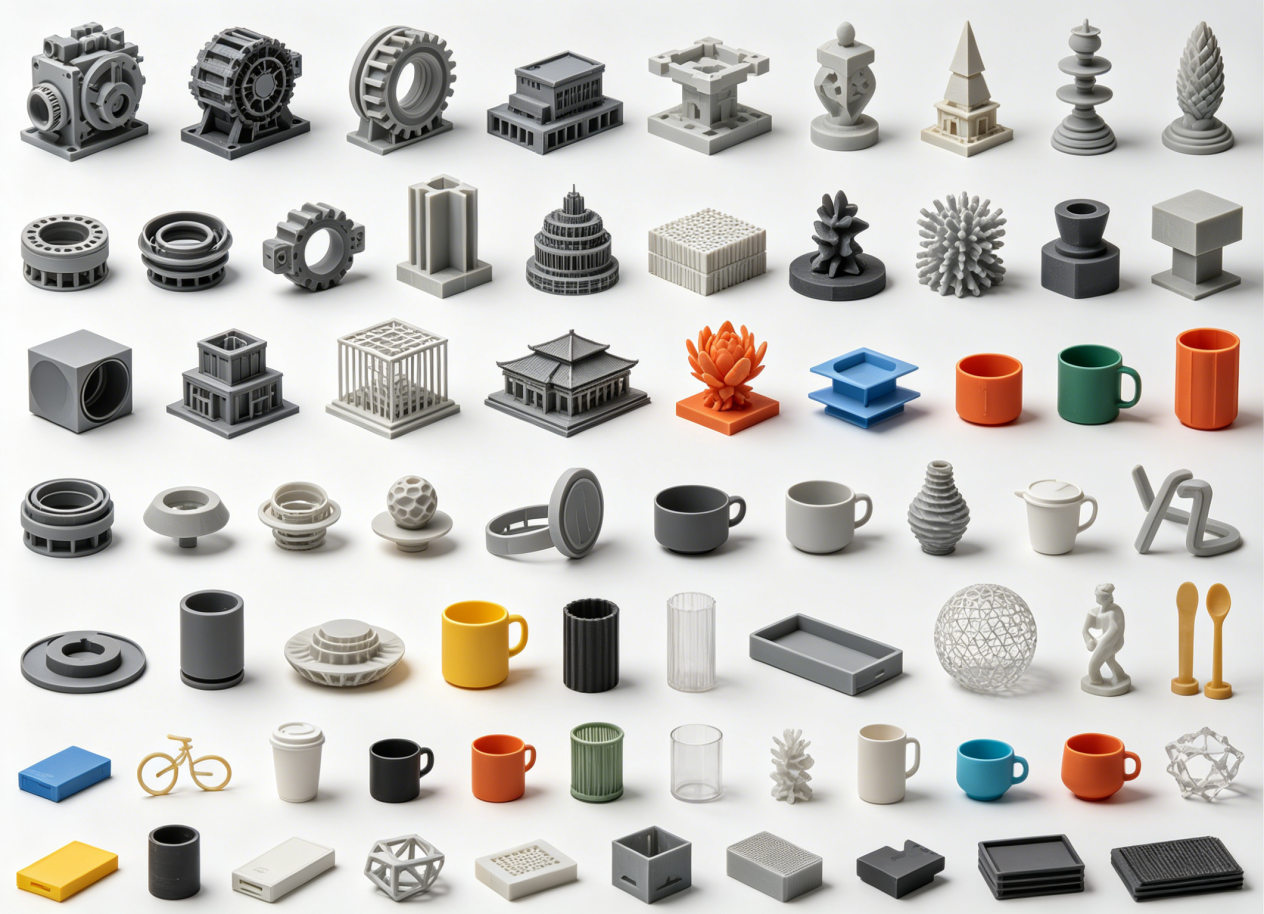
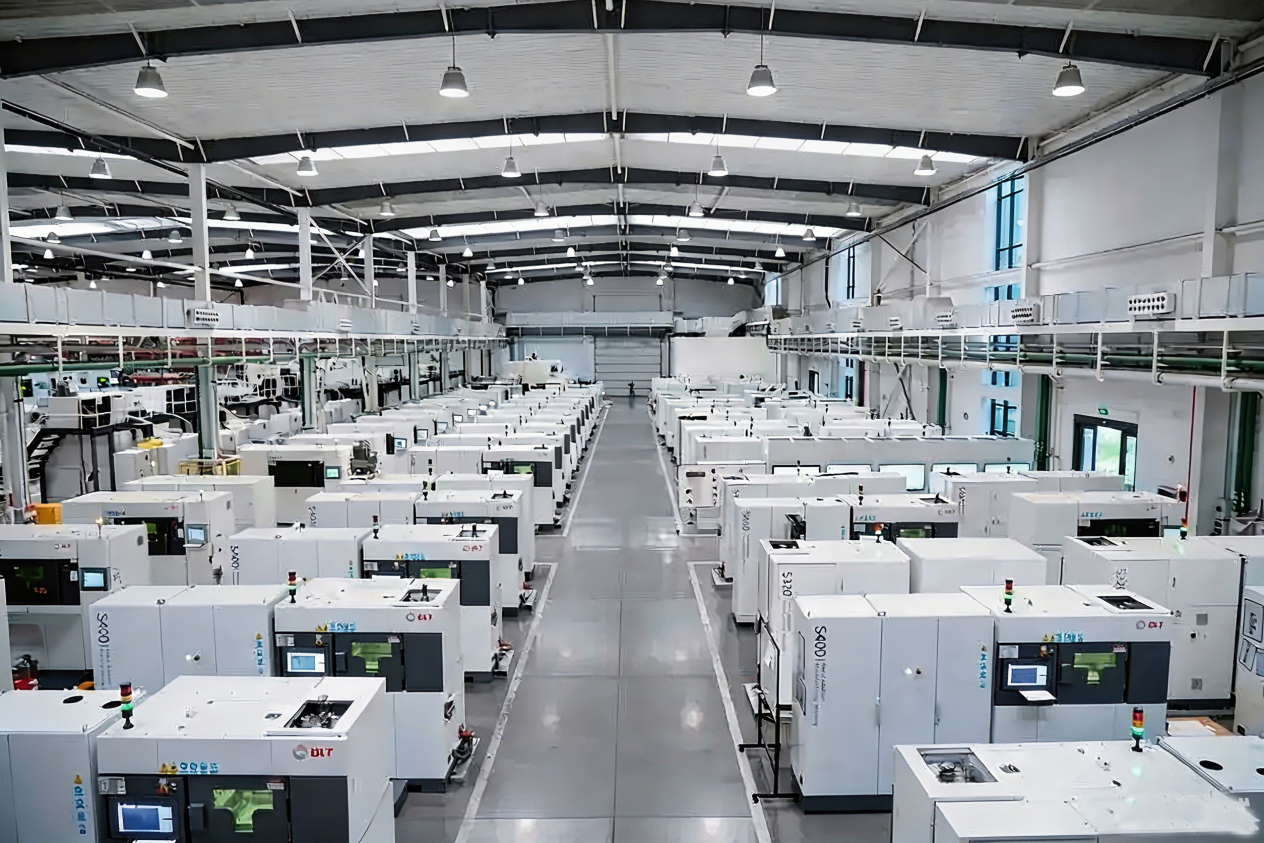
This ongoing shift enables development teams to test fresh concepts in real-world scenarios without committing to restrictive upfront development timelines. By embracing these adaptable design workflows, organizations can steadily minimize early-stage financial risks while preserving total freedom for structural innovation. This helpful technical analysis compares traditional tooling methods with the capabilities of a China best industrial 3d printing service, offering a clear, scientific baseline to help engineering and purchasing teams choose the best approach for their next project.
Initial Investment Dynamics and Operational Elasticity
The financial structure of conventional tooling presents a notable entry barrier for new product development. Traditional manufacturing techniques require substantial upfront capital expenditure for the engineering, machining, and validation of rigid steel or aluminum molds. This intensive setup period often spans several weeks or months, creating a prolonged time-to-market window. Furthermore, traditional injection molding and stamping methodologies establish rigid minimum order quantities to amortize initial tooling expenditures across millions of individual components, restricting product agility.
Conversely, the implementation of an industrial 3d printing service transforms capital infrastructure into a flexible operating expense. Xiamen Goldcattle Plastic & Metal Products Co., Ltd. addresses this traditional restriction through a service architecture that permits a minimum order quantity of a single piece. Eliminating specialized mold fabrication allows engineering teams to initiate structural component fabrication immediately from computer-aided design files, removing upfront capital barriers.
Operational flexibility increases further through the integration of hybrid manufacturing ecosystems. By combining computer numerical control machining with additive manufacturing, Xiamen Goldcattle evaluates individual component geometries to deploy the most cost-effective technique. This hybrid approach allows global buyers to scale smoothly from a single functional validation piece up to low-to-medium volume commercial batches, maintaining structural efficiency across varying production scales.
Structural Geometry and Tolerance Realization
Conventional tooling operates under strict geometric limitations dictated by physical demolding mechanics. Component designers must incorporate uniform wall thicknesses, specific draft angles, and visible parting lines to ensure seamless ejection from a physical mold core. Internal cooling channels, complex undercuts, and optimized lattices are either impossible to fabricate or require highly complex multi-part assemblies that increase overall component weight and introduce structural failure points.
Additive processing bypasses these physical machining constraints by building components layer by layer. Utilizing a high-precision best industrial 3d printing service allows the execution of intricate internal geometries and consolidated assemblies directly from a digital file. Xiamen Goldcattle achieves technical tolerances of ±0.005~0.02mm, satisfying strict dimensional accuracy standards for demanding sectors like automotive systems and medical instruments.
This geometric capability enables advanced topology optimization, allowing developers to reduce component weight while preserving mechanical strength. Multi-part structural units that previously required extensive hardware fastening or secondary welding can be produced as unified monolithic components, improving structural reliability and shortening factory assembly lines.
Material Composition and Surface Enhancements
Material limitations in traditional tooling often hinder effective prototyping and functional testing. Standard high-volume molds are optimized for a specific polymer or alloy group, meaning any significant changes to the base material require extensive recalibration or entirely new tooling assets. Testing alternative engineering plastics during the validation phase therefore involves significant costs and extended development timelines.
Advanced additive services offer a broad spectrum of compatible materials without requiring process retooling. Xiamen Goldcattle Plastic & Metal Products Co., Ltd. utilizes an expansive material matrix ranging from standard engineering polymers like acrylonitrile butadiene styrene, polycarbonate, and polyamide 66 to high-strength stainless steel alloys. This material diversity enables accurate functional testing with final-grade substrates early in the engineering phase.
Furthermore, post-processing options like specialized industrial painting and electroplating ensure parts meet aesthetic and environmental standards. This comprehensive material and finishing capability ensures additive components match the performance metrics of traditional molded goods.
Strategic Manufacturing Integration
The choice between traditional tooling and an industrial 3d printing service is not an exclusive preference for one technology, but a strategic matching of process capabilities to production volumes. Traditional tooling remains highly cost-effective for large-scale, standardized production runs where upfront capital can be distributed across large volumes. However, for specialized equipment development, iterative testing, and low-to-medium volume production, additive methods offer clear advantages in speed, flexibility, and cost control.
Xiamen Goldcattle provides comprehensive engineering solutions that balance these technologies across a product's lifecycle. By maintaining both precision machining lines and advanced additive production, the enterprise helps clients select the optimal fabrication path based on total cost of ownership and product requirements. This dual capability ensures companies can adapt efficiently to shifting market demands.
For more detailed technical documentation and complete engineering specifications, please review the information available on the corporate platform: https://www.xmgoldcattle.com/
Xiamen Goldcattle Plastic & Metal Products Co., Ltd.
Xiamen Goldcattle Plastic & Metal Products Co., Ltd.
+86 181 5009 7490
email us here
Visit us on social media:
Instagram
YouTube
Legal Disclaimer:
EIN Presswire provides this news content "as is" without warranty of any kind. We do not accept any responsibility or liability for the accuracy, content, images, videos, licenses, completeness, legality, or reliability of the information contained in this article. If you have any complaints or copyright issues related to this article, kindly contact the author above.
