

Innovation Trends: The Future of TPB40/TPB60/TPB90 Pneumatic Hammer Technology at SHENLI
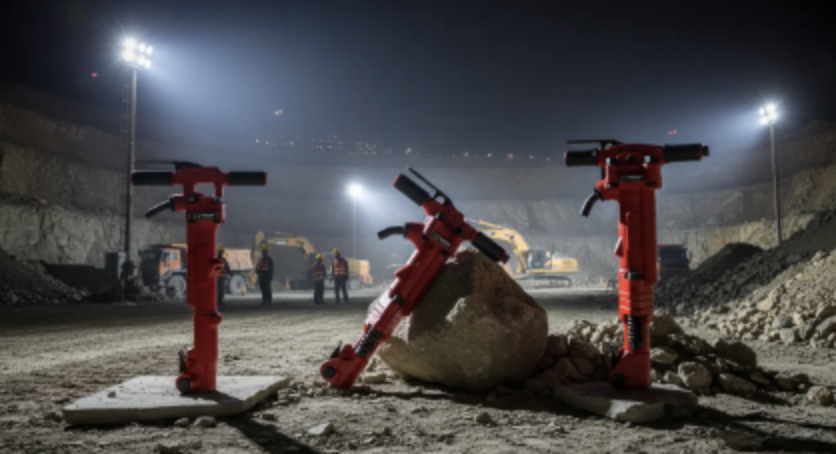
To understand where the future of demolition technology is headed, you have to look closely at what actually happens on a live jobsite. Whether it is a quarry in South America or a railway tunnel expansion in Southeast Asia, the pneumatic breaker takes a beating unlike any other tool. The primary issue field crews face is premature internal wear. Traditional hammers often experience cylinder scoring or piston breakage when forced to run continuously against high-resistance materials like granite or reinforced concrete. When a tool breaks down mid-shift, it does not just mean buying a spare part; it stops the whole crew, pushes back schedules, and eats into project profits. To address these field realities, finding a partner that blends practical engineering with reliable manufacturing has become a top priority for project managers worldwide. As a Global Leading Professional TPB40/TPB60/TPB90 Pneumatic Hammer Supplier, companies like SHENLI have shifted their focus from mere mass production to targeted engineering modifications that solve these day-to-day operational headaches.
Another massive headache is energy inefficiency. Older generations of heavy-duty breakers require an immense volume of compressed air to maintain their impact energy. This forces contractors to haul larger, more expensive air compressors to the site, dragging up daily fuel consumption. Furthermore, the sheer physical toll on operators cannot be ignored. Severe hand-arm vibration from unoptimized tools leads to rapid worker fatigue and long-term health issues, which directly reduces daily productivity. Innovation in this sector is no longer about making a tool heavier or louder; it is about making it smarter, more durable, and far easier to handle during a grueling eight-hour shift.
1.Rethinking Component Engineering for Maximum Lifespan
The evolution of modern pneumatic hammer design relies heavily on material selection and precision manufacturing. Looking at the core product lineup, which includes heavy-weight hitters like the TPB40, TPB60, and TPB90, the SHENLI technical focus has moved toward advanced metallurgy. In the past, standard carbon steels were common, but they quickly succumbed to fatigue under high-frequency impacts. Today, the transition toward high-strength alloy steels treated with specialized carburizing processes has changed the game.
By hardening the outer skin of critical components—such as the piston, cylinder, and valve body—while maintaining a resilient, shock-absorbing inner core, these tools can withstand millions of cycles without fracturing. For instance, the heavy-duty TPB90 Pneumatic Hammer is specifically built for severe rock-splitting and pavement-breaking tasks where lesser tools crumble. The engineering focus here is on reducing internal friction points. By refining the internal air distribution systems, air flows smoothly through the valve structure, minimizing pressure drops and preventing internal heat buildup. This simple, robust mechanical approach ensures that the tool keeps striking consistently even in ambient temperatures that would cause other equipment to overheat and seize.
2.Optimizing Air Efficiency and Hard-Hitting Impact Mechanics
A major innovation path for the next generation of demolition tools involves balancing hard-hitting impact with optimized air consumption. On any modern construction site, a pneumatic breaker must deliver maximum force per blow without draining the compressor's air supply. This is achieved by redesigning the internal stroke length and valve timing. By precisely controlling the expansion of compressed air within the cylinder, engineers can maximize the force hitting the chisel while using less volume.
In mid-sized options like the TPB60 Pneumatic Hammer, this balanced mechanics layout allows operators to break through hard asphalt and medium concrete with exceptional speed, while using smaller, more fuel-efficient mobile compressors. The benefit is clear for rental houses and small contractors alike: lower operating costs and less wear on the supporting air systems. Instead of relying on complex electronic sensors or fragile external components that would instantly break when covered in mud and stone dust, the focus remains on perfecting the pure, reliable physics of pneumatic valving. This guarantees that when a worker hooks up the hose, the tool delivers its full rated impact energy immediately, every single time.
3.Ergonomics and Safety from the Operator’s Perspective
No matter how powerful a piece of mining equipment is, it is only as good as the person operating it. If a tool causes excessive physical strain, productivity plummets within the first two hours of a shift. Therefore, modern design trends place a massive emphasis on real-world ergonomics. Traditional breakers transmit almost the entirety of their recoil directly into the worker’s arms and shoulders. The future of hammer technology relies on smart vibration damping.
By isolating the main handle assemblies from the heavy power cylinder using heavy-duty rubber shock mounts or spring-loaded suspension casings, modern designs absorb a significant portion of the destructive recoil. In lighter, faster units like the TPB40 Pneumatic Hammer, which are frequently used for horizontal breaking and trenching work, proper weight distribution is vital. Aligning the tool’s center of gravity with the natural stance of the operator makes handling much smoother. It reduces back strain, helps the worker guide the chisel accurately, and ensures they can maintain a steady pace throughout the afternoon without suffering from early exhaustion.
The Path Forward for Pneumatic Infrastructure Tools
As global infrastructure demands continue to grow, the machinery powering this expansion must adapt to harsher environments, stricter emissions rules via compressor efficiency, and a shrinking pool of skilled labor. The clear path forward for pneumatic technology does not lie in overly complex gadgets, but in refining the raw durability and efficiency of traditional mechanics.
By focusing heavily on advanced alloy metallurgy, streamlined internal air paths, and practical operator protection, the industry is creating a generation of tools that are both highly efficient and remarkably tough. Products that can thrive under the punishing realities of modern mining, tunnel construction, and railway engineering will continue to dominate the market. For crews working deep in the trenches, success will always come down to having a tool that keeps hitting hard, day after day, without letting them down when the pressure is on.
To learn more about the complete range of heavy-duty demolition and drilling solutions, visit the official website at https://www.y-sld.com/.
SHENLI MACHINERY TRADING CO.,LTD
SHENLI MACHINERY TRADING CO.,LTD
375-227-9993
email us here
Legal Disclaimer:
EIN Presswire provides this news content "as is" without warranty of any kind. We do not accept any responsibility or liability for the accuracy, content, images, videos, licenses, completeness, legality, or reliability of the information contained in this article. If you have any complaints or copyright issues related to this article, kindly contact the author above.
