

The Role of Natural Fibre Systems in Lower-Carbon Earthworks Design
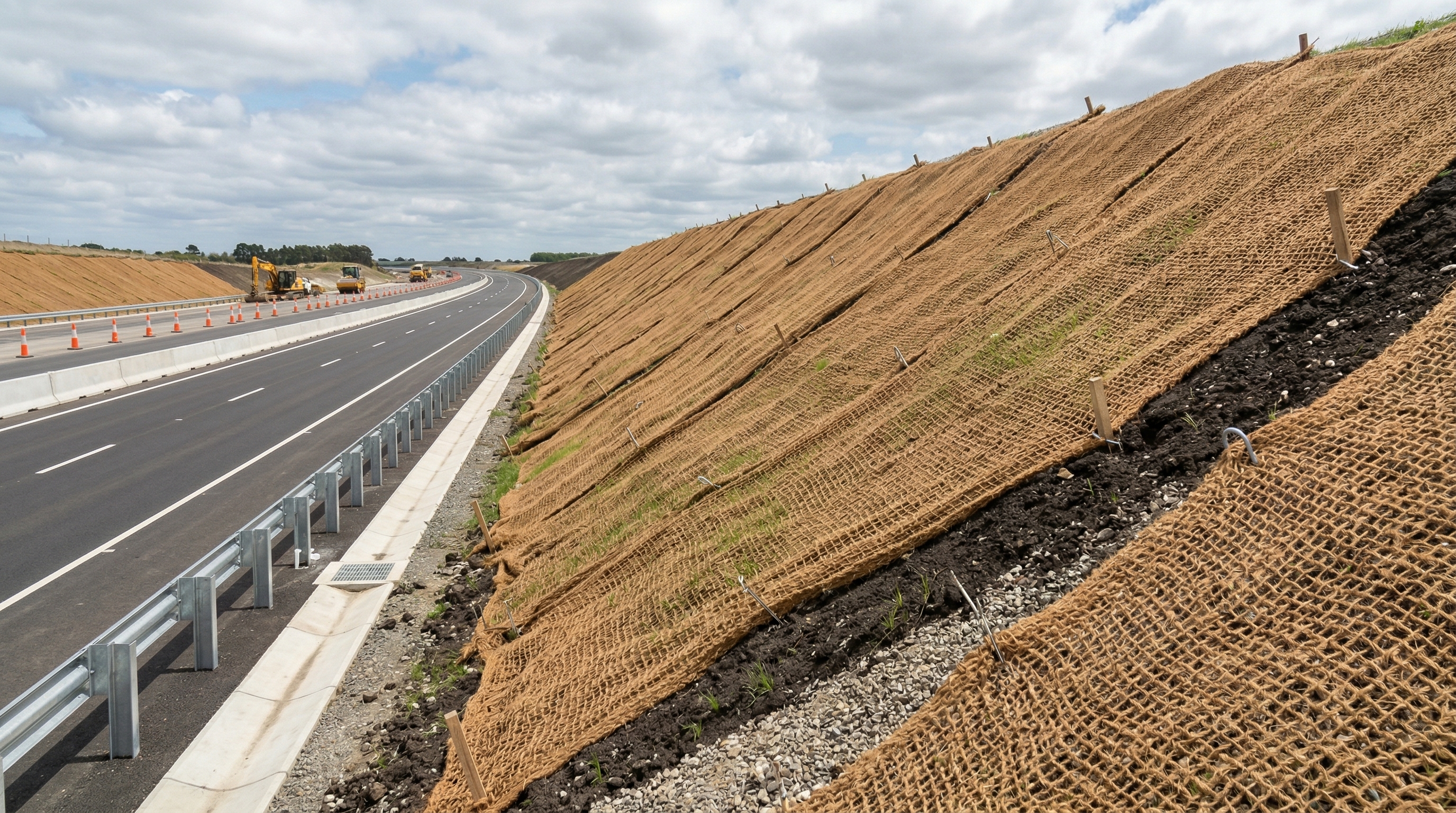
natural fibre solutions for erosion control

salike logo
The Role of Natural Fibre Systems in Lower-Carbon Earthworks Design
LONDON, UNITED KINGDOM, May 28, 2026 /EINPresswire.com/ -- Growing emphasis on embodied carbon reduction across UK infrastructure projects is influencing material selection within geotechnical engineering and earthworks delivery.Industry guidance linked to net zero policy objectives, whole-life carbon assessment frameworks, and supply chain reporting requirements has increased scrutiny on construction materials used in temporary and transitional applications, including erosion control and slope stabilisation systems.
Embodied carbon refers to greenhouse gas emissions associated with material extraction, manufacture, transportation, installation, maintenance, and end-of-life treatment.
Within geotechnical and civil engineering works, these emissions may arise through the use of polymer-based erosion control systems, cementitious stabilisation techniques, imported fill materials, and reinforcement products.
The UK’s legally binding commitment to achieving net zero greenhouse gas emissions by 2050 under the Climate Change Act 2008, alongside wider infrastructure decarbonisation initiatives, has contributed to increased focus on whole-life carbon performance in procurement and project delivery.
At the same time, carbon reporting frameworks such as PAS 2080, the Greenhouse Gas Protocol, and Task Force on Climate-related Financial Disclosures (TCFD) guidance are influencing how contractors, infrastructure owners, and public authorities assess supply chain emissions.
In many infrastructure projects, Scope 3 emissions, which include emissions associated with purchased materials and subcontracted works, represent a significant proportion of reported carbon impact.
Within this context, biodegradable natural fibre systems are increasingly being considered for applications where long-term material persistence may not be required.
Natural fibre erosion control products, including coir netting, coir blankets, and coir logs, are commonly used in applications such as:
• Surface erosion control
• Vegetation establishment
• Temporary slope protection
• Embankment stabilisation
• Riverbank and ecological restoration works
Unlike synthetic alternatives designed for long-term subsurface permanence, biodegradable systems are intended to degrade over defined periods as vegetation establishes and natural root structures assume stabilising function.
Industry discussions around carbon-conscious specification have increasingly focused on:
• Raw material sourcing
• Manufacturing intensity
• Transportation impacts
• Installation requirements
• End-of-life disposal considerations
• Long-term material persistence
Several infrastructure and public sector organisations have introduced procurement criteria incorporating sustainability and carbon assessment measures, including whole-life carbon evaluations and supply chain transparency requirements.
The Construction Leadership Council’s Net Zero Carbon Industry Roadmap has also highlighted the importance of reducing embodied emissions associated with construction materials and infrastructure delivery.
While synthetic and structural geotechnical products remain necessary in high-load and permanent engineering applications, biodegradable systems may provide an alternative option in temporary or transitional erosion control scenarios where long-term persistence is not technically required.
Salike, a UK-based supplier of natural fibre erosion control systems, states that interest in biodegradable geotechnical materials has increased alongside wider industry attention on embodied carbon reporting and nature-based infrastructure approaches.
According to the company, specification decisions are increasingly being evaluated not only on immediate engineering performance, but also on lifecycle considerations and long-term environmental impact.
The company supplies coir-based erosion control materials for applications including slope stabilisation, revegetation support, riverbank protection, and ecological restoration works.
As carbon reporting obligations continue to evolve across the infrastructure sector, material selection within geotechnical engineering is expected to remain an area of ongoing industry focus.
Shiran Amunugama
Salike Geotechnical
email us here
Visit us on social media:
LinkedIn
Instagram
Facebook
X
Legal Disclaimer:
EIN Presswire provides this news content "as is" without warranty of any kind. We do not accept any responsibility or liability for the accuracy, content, images, videos, licenses, completeness, legality, or reliability of the information contained in this article. If you have any complaints or copyright issues related to this article, kindly contact the author above.
