

RegulatingAI Podcast with Sanjay Puri: Noah Gillespie on Policy, Innovation, and the Race to Keep Up

RegulatingAI Podcast
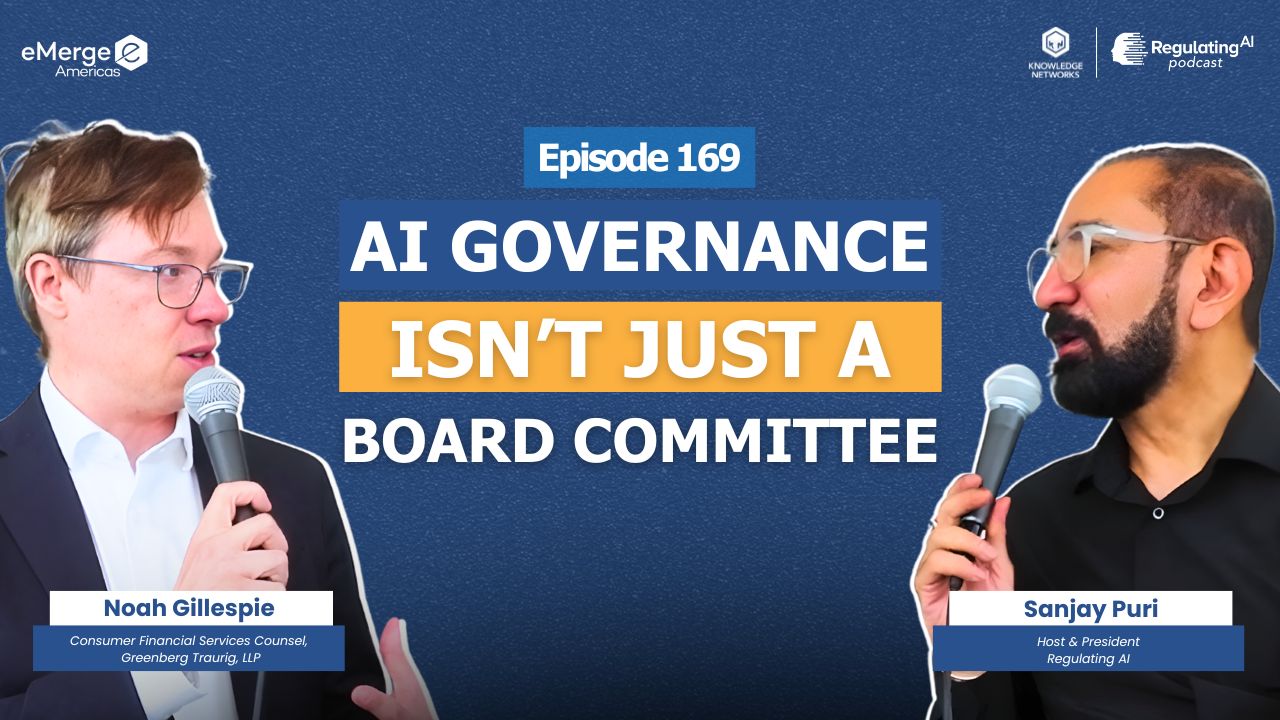
Noah Gillespie, Consumer Financial Services Counsel at Greenberg Traurig, LLP with Sanjay Puri, President of RegulatingAI
On the RegulatingAI Podcast, Sanjay Puri and Noah Gillespie discuss how policy struggles to keep up with fast AI growth and why collaboration matters.
Sanjay Puri opens the discussion by highlighting a key issue: technology evolves much faster than policy. Noah Gillespie agrees and explains that regulators often start by understanding what is already happening in the market. Agencies collect complaints from consumers, which helps them identify major problems. These complaints guide regulators on where to focus their limited resources.
The Regulatory Landscape and Consumer Protection
Gillespie shares insights from his time at the Consumer Financial Protection Bureau. He explains that regulators first try to apply existing laws to new technologies. For example, if an AI system causes discrimination in hiring, current anti-discrimination laws still apply. This approach helps maintain some level of control while new rules are still under development. However, policymaking is not simple. Gillespie says regulators must think about more than just the immediate impact of a rule. They must also consider long-term effects on businesses, consumers, and the broader economy. Every decision can create ripple effects across industries. This careful process slows down policy development, but it helps avoid unintended harm.
Sanjay Puri also raises concerns about the gap between large tech companies and smaller businesses. Big companies often have more resources, better data, and stronger influence. Gillespie responds by suggesting that smaller businesses join industry associations. These groups allow companies to share ideas, stay informed, and speak with a stronger collective voice when engaging with regulators. Another key issue discussed on the podcast is compliance. Gillespie explains that companies must follow laws based on where their customers live, not just where the business operates. This creates challenges for online platforms, as they must comply with multiple state and national laws at once. He advises businesses to understand existing regulations and prepare for future changes.
The conversation also touches on the debate between open-source and proprietary AI systems. Gillespie does not take a firm stance but encourages companies to focus on their purpose and values. He believes that decisions about openness or protection should align with a company’s goals and responsibilities. Cybersecurity and risk management also play a major role. Gillespie explains that tools like cyber insurance can help reduce financial losses, but they are not enough on their own. Companies must build strong internal systems, including clear policies, authentication processes, and a culture of responsibility. Prevention, he says, is always better than reacting after a problem occurs. Sanjay Puri asks whether setting up AI governance or ethics committees is enough. Gillespie responds that governance must go deeper. Companies need a multi-layered approach that includes leadership involvement, clear procedures, and ongoing risk assessment. He stresses the importance of being able to explain decisions to regulators and customers if something goes wrong.
Finally, the discussion turns to data sovereignty. Gillespie explains that countries want control over their own data and how it is used. This issue is becoming more important as global data flows increase. He believes that nations must decide what they value and how they want to protect their citizens’ data. In this episode of the RegulatingAI podcast, Sanjay Puri and Noah Gillespie provide a clear view of the challenges in AI governance. They show that while technology moves fast, thoughtful policy requires time, collaboration, and careful planning.
Upasana Das
Knowledge Networks
email us here
Visit us on social media:
LinkedIn
Instagram
Facebook
YouTube
X
Legal Disclaimer:
EIN Presswire provides this news content "as is" without warranty of any kind. We do not accept any responsibility or liability for the accuracy, content, images, videos, licenses, completeness, legality, or reliability of the information contained in this article. If you have any complaints or copyright issues related to this article, kindly contact the author above.
